PC Cases Buying Guide (2026): What Matters and 8 Picks
As an Amazon Associate we earn from qualifying purchases. Links on this page are affiliate links.
Finding the right enclosure starts with understanding how hardware dimensions match your build plan. This PC case buying guide outlines the physical constraints that determine whether your components fit and operate properly together. You will be able to decide which form factor suits your available space, cooling needs, and expansion plans. The guide walks through critical choices like motherboard form factor support, graphics card clearance limits, CPU cooler heights, drive bay options, and peripheral management.
Every build has distinct hardware constraints, so knowing verified dimensions prevents fit issues before you assemble your system. The 8 selections featured for 2026 were chosen strictly from their published specifications to highlight practical layout differences and sizing requirements. By comparing these baseline factory metrics, you can directly determine which chassis accommodates your graphics card, power supply, and cooling setup without unexpected assembly hurdles.
Our top pick: Zalman 4-Port ARGB Controller Hub.
Key Factors for Choosing PC Cases
Motherboard Form Factor Support
Your case selection must match the physical footprint of your chosen motherboard. Standard ATX boards offer the maximum number of expansion slots, multiple PCIe lanes, and comprehensive header layouts, but they require larger mid-tower or full-tower enclosures. Micro-ATX motherboards balance physical footprint with balanced expansion, presenting a middle ground for builders who need multiple PCIe devices without dedicating significant desk space to an oversized chassis. Mini-ITX boards condense primary computing functions down to a single expansion slot, catering to minimal footprints and compact builds. Choosing an enclosure designed strictly for smaller standards prevents you from installing ATX components later. Conversely, mounting a tiny Mini-ITX board inside an ATX mid-tower chassis like the Thermaltake Versa H21 ATX Mid Tower wastes internal volume and leaves substantial empty space. You must verify that your chassis screw standoff patterns align directly with your motherboard dimensions before finalizing component combinations to ensure clean cable routing, secure component grounding, and proper rear I/O shield alignment.
- Motherboard mounting standards matching ATX, Micro-ATX, or Mini-ITX dimensions
- Pre-installed standoff locations aligned with your board layout
Chassis Size and Portability
External chassis volume dictates physical space requirements on your desk and determines ease of relocation. Mid-tower layouts measure upward of sixteen to eighteen inches in height and depth, giving you ample internal workspace during assembly at the expense of desk real estate. Mini-towers and small form factor enclosures drastically lower the overall footprint, making them ideal for compact desks, dorm rooms, or secondary workstations. Ultra-compact enclosures often incorporate specialized orientation options, such as standing vertically or lying horizontally under monitors. Some models, such as the SilverStone Slim Mini-ITX Case with Handle, integrate dedicated carrying handles to streamline transit for LAN events or portable workloads. The trade-off with smaller chassis dimensions is working room. Tightly packed enclosures demand precise cable routing, strict assembly order, and limited component clearance during routine upkeep. Larger enclosures grant effortless access to internal ports and headers whenever you swap storage or adjust memory modules, but they occupy significant surface area and add total system weight.
- External chassis dimensions matching your available desk surface area
- Integrated carrying handles or dual orientation options for transport
Graphics Card Clearance
Graphics card dimensions vary widely across manufacturer shroud designs, making internal clearance a crucial metric. High-performance graphics cards often exceed eleven to thirteen inches in total length and require multiple expansion slot brackets. A compact chassis must supply sufficient horizontal depth or specialized internal layouts to house these longer circuit boards without obstructing front-mounted intake fans. The Cooler Master N200 Mesh Mini-Tower illustrates how a compact frame can accommodate full-length graphics cards alongside dedicated drive cages. Selecting an enclosure with tight GPU clearance limits your component upgrade paths. If you install an extra-long card into an undersized chassis, you risk physical interference with drive bays, front-panel wiring, or front-mounted liquid cooling radiators. You should always measure your card length from the mounting bracket to the edge of the fan shroud before purchase. Balancing your case depth against GPU length prevents clearance bottlenecks while preserving necessary perimeter airspace for cooling intake fans to draw fresh air across heat sinks.
- Published maximum graphics card length compared to your card dimensions
- Expansion slot count matching multi-slot card bracket widths
CPU Cooler Height Limits
Processor heatsinks require vertical clearance measured directly from the motherboard surface to the inside edge of the side panel. Large tower-style air coolers utilize tall heat pipes and wide fans that demand deep cases, typically needing over one hundred fifty millimeters of space. Small form factor cases invert or compact internal layouts to conserve volume, which sharply curtails available height for air heatsinks. For example, the SilverStone Micro-ATX Small Form Factor Case enforces an 82mm maximum CPU cooler height because the power supply mounts directly above the motherboard area. Selecting a shallow case forces you to run low-profile top-down air coolers or compact all-in-one liquid radiators. Low-profile coolers function adequately for standard desktop processors, but they feature less surface area than full-sized twin-tower heatsinks, limiting thermal headroom on high-wattage CPUs. Reviewing cooler height limits prior to assembly ensures your chosen heatsink clears both your memory modules and the case panel without forcing chassis bowing or contact.
- Maximum vertical heatsink height listed in manufacturer chassis specifications
- Sufficient clearance above the CPU socket for low-profile coolers
Power Supply and Storage Mounting
Power supply compatibility and internal drive mounting dictate how easily your system powers components and manages cabling. Standard ATX power supplies are common and provide varied cable configurations, but their physical length can clash with drive brackets in small chassis. Dedicated drive bays allow builders to mount multiple storage drives or specialized peripherals. For instance, the Chieftec Micro-ATX Case accommodates legacy optical drive hardware alongside standard internal drive arrangements in a compact desktop profile. However, dedicating internal chassis volume to fixed drive cages restricts clearance for long power supplies and extra cable slack. Conversely, cases that omit five-and-a-quarter-inch external bays and large internal drive cages provide open internal cavities for straight-line airflow and simpler cable runs, but they require you to rely exclusively on motherboard-mounted M.2 solid-state drives. Balancing your primary storage needs against chassis interior volume prevents physical collisions between power cables and internal drive trays during system assembly.
- Power supply standard compatibility covering ATX or specialized form factors
- Internal drive bay count for 2.5-inch and 3.5-inch storage drives
Front Panel Ventilation and Airflow
Front panel construction directly impacts operating temperatures for internal graphics cards and processors. Solid front panels damp acoustic noise from spinning fans, but they frequently choke intake air volume by restricting flow to narrow side slits. Perforated mesh panels allow fans to pull ambient air directly into the chassis with minimal air resistance. A compact chassis such as the Fractal Design Core Micro ATX Case relies on open front ventilation to sustain component cooling within a reduced internal volume. The trade-off with high-airflow mesh panels is acoustic transmission and airborne dust accumulation. Open mesh fronts permit internal fan hum and coil whine to escape into your workspace more readily than insulated solid panels. Furthermore, porous front fascias require frequent cleaning of intake filters to stop dust buildup across sensitive component circuit boards. Choosing front panel airflow over noise isolation depends on whether your hardware generates heavy thermal loads during prolonged workstation use or high-intensity computing tasks.
- Perforated mesh front panel design for unobstructed intake airflow
- Removable dust filtration over intake fan mounting positions
Lighting and Header Control
Managing addressable RGB illumination and fan wiring requires dedicated header connectivity across your internal hardware. Modern illuminated cooling fans utilize 3-pin 5V ARGB connectors to coordinate lighting effects across the system. If your chosen motherboard lacks sufficient onboard illumination headers, you must use auxiliary hardware to bridge the gap. Adding an accessory such as the Zalman 4-Port ARGB Controller Hub allows you to power and synchronize up to four 3-pin ARGB devices using case switch integration or magnetic mounting. The trade-off with adding dedicated controller hubs inside your chassis is cable management clutter. Every additional lighting hub introduces extra SATA power connections, internal switch wiring, and individual lighting cables that must be tucked neatly behind the motherboard tray. If you select a compact case with minimal clearance behind the back panel, routing these surplus lighting wires becomes difficult. Planning your header count early determines whether your build maintains synchronized lighting without creating cable clutter that blocks airflow channels.
- Available 3-pin 5V ARGB motherboard headers or dedicated hub ports
- Clearance behind the motherboard tray to conceal controller wiring
Common PC Case and Fan Formats
ATX Mid-Tower Cases
ATX mid-tower cases provide standard chassis dimensions that house full-size ATX motherboards, standard power supplies, and multiple expansion cards. These enclosures feature generous internal clearance for long graphics cards, standard liquid cooling radiators, and several storage drives, as seen on models like the Thermaltake Versa H21. You will find that routing internal cables and mounting multiple case fans is straightforward due to the open interior layout. This format suits builders who prioritize standard part compatibility, straightforward component upgrades, and maximum hardware flexibility over desk space conservation. The primary trade-off is the physical footprint, as mid-towers occupy noticeably more desk or floor area than compact alternatives.
Micro-ATX Mini-Tower Cases
Micro-ATX mini-towers balance a reduced chassis height with room for dual-slot graphics cards and multiple storage drives. Designs like the Cooler Master N200 and Fractal Design Core 1000 shave several inches off vertical desktop space while accommodating standard Micro-ATX motherboards. These enclosures suit builders who want dedicated desktop systems with multiple drives or expansion cards without committing to a full mid-tower footprint. You maintain clearance for long graphics cards, but you face narrower tolerances when routing cables behind the motherboard tray. The main trade-off is reduced expansion capacity compared to ATX, alongside tighter clearance for thick front liquid cooling radiators and taller aftermarket CPU air coolers.
Small Form Factor Cases
Small form factor Mini-ITX cases compress standard computing hardware into minimal volume, occupying a fraction of typical desk space. Models such as the SilverStone SG13B and the slim, handle-equipped SilverStone ML08B-H focus on high internal density. These enclosures appeal to users building portable setups, media centers, or clean workstations where physical space is scarce. Some designs accommodate full-length graphics cards or standard ATX power supplies, giving you substantial processing power in a shoebox or console profile. The main trade-off centers on severe space constraints. You must plan component installation order carefully, as low CPU cooler height limits and dense cable runs restrict airflow and complicate upgrades.
Fan and Lighting Control Hubs
Fan and lighting controller hubs serve as centralized hardware distribution points for chassis illumination and cooling lines. Devices such as the Zalman 4-Port ARGB Controller Hub allow you to operate multiple 3-pin addressable RGB components from an independent module, even when your motherboard lacks sufficient onboard headers. This hardware suits builders who install multiple intake and exhaust fans or decorative lighting strips and want synchronized patterns or chassis-button control. You avoid overloading individual motherboard headers by drawing direct power from the power supply. The primary trade-off involves additional cable management. Adding a dedicated hub introduces extra power leads and input wires that you must secure within the rear chassis panel.
Common PC Case Buying Mistakes
Ignoring CPU tower cooler height clearance specifications
Air coolers vary significantly in overall height. If your case does not provide sufficient vertical clearance between the motherboard socket and side panel, the panel will not close. Check the maximum CPU cooler height listed in the case specifications sheet. Compare this figure directly against the total height of your chosen air cooler heatsink before purchasing.
Overlooking power supply length limits when drive cages remain installed
Power supplies require extra space behind the unit for modular cable bends. Installing a long power supply alongside a fixed bottom 3.5-inch hard drive cage cramps modular connectors and blocks airflow. Check the maximum PSU length specification with the drive cage installed. If your power supply exceeds this length, verify whether the internal hard drive cage can be removed or relocated.
Forgetting front radiator thickness when calculating GPU length clearance
Published case GPU clearance specifications measure open space without a radiator installed. Mounting an AIO liquid cooler radiator and fans inside the front panel reduces available GPU room by 50 to 60 millimeters. Subtract the combined depth of your front radiator and fans from the case maximum graphics card length to ensure your graphics card still installs cleanly without contacting the cooling hardware.
Neglecting top radiator clearance relative to tall motherboard memory modules
Top radiator mounts often place cooling hardware directly above motherboard components. Thick radiators or push-pull fan setups can collide with tall memory heatsinks or high VRM cooling blocks. Check the offset distance between the top panel and the motherboard edge in the case specs. Select standard-profile RAM modules or verify dedicated radiator offset bracket clearance before assembling top-mounted liquid coolers.
Mismatching front I/O ports with available motherboard internal headers
Modern cases frequently include front-panel USB Type-C ports requiring specific internal header connections. If your motherboard lacks a Type-E Key-A internal header or has insufficient USB 3.0 headers, front chassis ports remain unusable without add-in cards. Check the case front I/O specifications against the internal connector pinouts listed in your motherboard manual to ensure direct compatibility for every external front-panel port.
Quick picks
Our 8 picks

Zalman 4-Port ARGB Controller Hub
Best for: managing four ARGB devices without motherboard headers
- Lighting
- ARGB
- Connector Type
- 3-Pin
- Dimensions
- 1.77 × 1.14 × 0.55 inches
This compact controller hub mounts inside your PC case to manage addressable lighting. You get four 5V 3-pin ARGB headers powered via a SATA connection. It features an onboard push button and a 2-pin header to hook into your case reset or LED switch. It also supports direct motherboard lighting synchronization. This hub suits you if you need to add ARGB components to a build lacking onboard motherboard headers.
Pros
- Four 5V 3-pin ARGB output ports
- Magnetic base allows mounting inside steel cases
- Supports standalone push-button control or motherboard synchronization
- Includes 2-pin header for chassis reset or LED switch connection
Cons
- Limited to four ARGB device connections
- Provides lighting control only without fan speed regulation
Good fit if
- You need to power up to four 3-pin ARGB devices independently of motherboard headers.
- You want to cycle lighting modes using your PC case reset or LED button.
- You want magnetic mounting inside a steel chassis.
Skip if
- You need PWM speed control for your case fans.
- You need to connect more than four ARGB components.
Verdict: Zalman 4-Port 5V ARGB Fan Controller Hub provides straightforward lighting control and motherboard synchronization for up to four 3-pin ARGB components. Its magnetic base and case switch integration make it a practical choice for systems needing external lighting management.

Fractal Design Core Micro ATX Case
Best for: compact Micro ATX builds with modest coolers
- Motherboard Support
- Micro ATX
- Max GPU Length
- Up to 350mm (210mm with HDD tray)
- Dimensions
- 16.5 × 6.8 × 13.9 inches
- Weight
- 8 pounds
The Fractal Design Core 1000 is a compact Micro ATX chassis. It measures 6.8 inches wide, 13.9 inches tall, and 16.5 inches deep, weighing 8 pounds. You get vertical hard drive mounting with anti-vibration silicone grommets. The layout accommodates graphics cards up to 350mm using one drive mount, or 210mm with both drive slots occupied. This suits your build if you need a lightweight, space-efficient Micro ATX setup.
Pros
- Supports GPUs up to 350mm using top HDD slot
- Removable vertical drive tray with anti-vibration silicone grommets
- Lightweight 8-pound Micro ATX chassis
- Compact footprint measuring 6.8 by 13.9 by 16.5 inches
Cons
- CPU cooler clearance limited to 135mm
- GPU clearance drops to 210mm when using both HDD slots
Good fit if
- You build with a Micro ATX motherboard.
- You need a lightweight chassis under 10 pounds.
- You use a graphics card under 350mm with one drive slot.
Skip if
- You plan to install a CPU cooler taller than 135mm.
- You need two HDDs alongside a graphics card longer than 210mm.
Verdict: Fractal Design Core 1000 Micro ATX Case provides a compact footprint with flexible GPU clearance depending on drive configuration. It delivers functional space management for standard Micro ATX components.

Cooler Master N200 Mesh Mini-Tower
Best for: compact Micro-ATX setups with long GPUs
- Motherboard Support
- mATX, Mini-ITX
- Case Type
- Mini Tower
- Radiator Support
- 240mm
- Max GPU Length
- 355mm (14 inches)
- Dimensions
- 17.5 × 7.9 × 14.9 inches
- Weight
- 9.5 pounds
The Cooler Master N200 Mesh Mini Tower is a compact micro-ATX chassis designed for airflow and component compatibility. It supports graphics cards up to 355mm long and CPU coolers up to 160mm tall, alongside space for a front 240mm liquid cooling radiator. You also get mounts for three 3.5-inch hard drives and four 2.5-inch solid-state drives. It suits you if you need a compact desk footprint without sacrificing cooling clearance.
Pros
- Fits graphics cards up to 355mm (14 inches) in length
- Supports a 240mm liquid cooling radiator at the front
- Holds up to three 3.5-inch HDDs and four 2.5-inch SSDs
- Removable dust filter under the power supply mount
Cons
- Does not support standard full-size ATX motherboards
- Front radiator support is limited to 240mm
Good fit if
- You plan to build with a Micro-ATX or Mini-ITX motherboard.
- You need room for a long graphics card up to 355mm.
- You want multiple storage drive mounting locations in a mini tower.
Skip if
- You need a chassis that accommodates full-size ATX motherboards.
- You plan to use a liquid cooling radiator larger than 240mm.
Verdict: Cooler Master N200 Mesh Mini Tower delivers strong component clearance and airflow options in a compact micro-ATX frame. It gives you room for long graphics cards and multiple storage drives without taking up excess desk space.
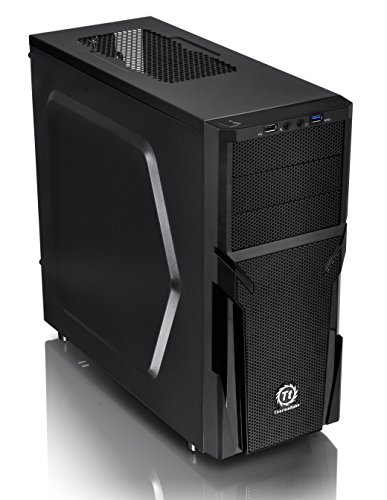
Thermaltake Versa H21 ATX Mid Tower
Best for: standard ATX builds needing mesh airflow
- Motherboard Support
- ATX
- Case Type
- Mid Tower
- Dimensions
- 18.7 × 8.2 × 16.9 inches
- Weight
- 9.3 pounds
The Thermaltake Versa H21 Mid Tower Case provides a standard ATX enclosure measuring 16.9 inches high, 8.2 inches wide, and 18.7 inches long. Perforated metal mesh spans the front and top panels to promote airflow, supported by elevated bottom foot-stands. It accommodates full ATX motherboards, long graphics cards, and liquid cooling setups with tool-free drive installation. Front-panel access includes one USB 3.0 port and one USB 2.0 port alongside audio jacks for your desktop components.
Pros
- Perforated metal mesh on front and top panels
- Tool-free drive and component installation
- Supports standard ATX motherboards and long graphics cards
- Front I/O features both USB 3.0 and USB 2.0 ports
Cons
- Only one USB 3.0 port on the front panel
- No front-panel USB-C port provided
Good fit if
- You plan to build with a full-size ATX motherboard.
- You want tool-free assembly for drives and hardware.
- You prefer perforated mesh panels for direct airflow.
Skip if
- You need modern USB-C ports on the front I/O panel.
- You want a compact small-form-factor enclosure.
Verdict: Thermaltake Versa H21 Mid Tower Case delivers standard ATX motherboard support and ventilated mesh panels in a traditional chassis layout. It provides core functionality with tool-free hardware bays, liquid cooling clearance, and basic dual-USB front connectivity.

Phanteks Enthoo Pro Non-Window Full Tower
Best for: large water cooling builds
- Case Type
- Full Tower
- Included Fans
- 1x 200mm, 1x 140mm
- Dimensions
- 22 × 10 × 21 inches
- Weight
- 2.2 pounds
The Phanteks Enthoo Pro is a full tower chassis measuring 21 by 22 by 10 inches. It includes a 200mm front fan and a 140mm rear fan. The design features a brushed plastic exterior with an aluminum appearance. You get two USB 3.0 ports and a USB-C Gen 2 port on the front. The case supports extensive water cooling with up to four radiator installation areas.
Pros
- Includes a 200mm front fan and a 140mm rear fan
- Supports up to four radiator installation areas for water cooling
- Features a USB-C Gen 2 port and two USB 3.0 ports
Cons
- No side window included in this black model
- Large full tower dimensions require significant desk space
- Brushed plastic exterior may feel less premium than metal
Good fit if
- You need extensive water cooling support for large builds
- You want a full tower chassis with strong airflow
- You prefer a stealth interior with hidden cables
Skip if
- You require a side window for component visibility
- You have limited space for a large full tower case
- You prefer a compact mini-itx form factor
Verdict: The Phanteks Enthoo Pro Full Tower fits builders who prioritize cooling capacity and cable management over aesthetics. It suits those with ample space and complex water cooling loops.
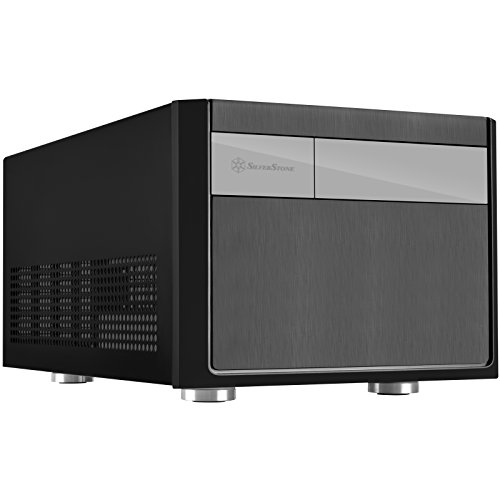
SilverStone Micro-ATX Small Form Factor Case
Best for: Micro-ATX builds with full-length graphics cards
- Motherboard Support
- Micro-ATX, Mini-DTX, Mini-ITX
- Case Type
- SFF
- Max GPU Length
- Any length
- Tower Size
- Small Form Factor
- Dimensions
- 19 × 15 × 13 inches
- Weight
- 13.5 pounds
View on Amazon: SilverStone Micro-ATX Small Form Factor Case
This SilverStone chassis is a small form factor PC case built for compact desktop builds. It supports Micro-ATX, Mini-DTX, and Mini-ITX motherboards while housing a standard ATX power supply. The internal layout accommodates graphics cards of any length, CPU coolers up to 82mm in height, and multiple 2.5-inch drives. It suits you if you need full-length expansion card support inside a chassis measuring 15 by 13 by 19 inches and weighing 13.45 pounds.
Pros
- Supports graphics cards of any length
- Compatible with standard ATX power supplies
- Accepts Micro-ATX, Mini-DTX, and Mini-ITX motherboards
- Provides mounting capacity for 2.5-inch drives
Cons
- Limits CPU cooler height to 82mm
- Does not support full-size ATX motherboards
- Weighs 13.45 pounds unpopulated
Good fit if
- You want to install a full-length graphics card in a small form factor chassis.
- You plan to use a standard ATX power supply with a Micro-ATX or Mini-ITX board.
- You need dedicated mounting capacity for 2.5-inch drives.
Skip if
- You require a CPU cooler taller than 82mm.
- You plan to build with a full-size ATX motherboard.
Verdict: SilverStone Micro-ATX Small Form Factor Case pairs full-length graphics card clearance with standard ATX power supply compatibility. Its primary constraint is the 82mm maximum CPU cooler height.

SilverStone Mini-ITX Mesh Front PC Case
Best for: Compact builds using standard ATX power supplies
- Motherboard Support
- Mini-DTX, Mini-ITX
- Radiator Support
- 140mm
- Max GPU Length
- 10.5 inches
- Dimensions
- 7.13 × 11.2 × 8.74 inches
- Weight
- 5.4 pounds
This compact chassis measures 11.22 by 8.74 by 7.13 inches and weighs 5.4 pounds, featuring a mesh front panel for airflow. It accommodates Mini-ITX and Mini-DTX motherboards alongside standard ATX power supplies. Inside, you get clearance for 10.5-inch expansion cards, single 120mm or 140mm liquid coolers, and 2.5-inch or 3.5-inch drives. It suits you if you want a small-footprint desktop without replacing standard power hardware.
Pros
- Supports standard-length expansion cards up to 10.5 inches
- Compatible with standard ATX power supplies
- Mounts 120mm or 140mm single-fan all-in-one liquid coolers
- Accommodates both 2.5-inch and 3.5-inch storage drives
- Elevated standoffs provide clearance for backside motherboard components
Cons
- Restricted to Mini-ITX and Mini-DTX form factors
- Cannot fit expansion cards exceeding 10.5 inches in length
- Liquid cooling support limited to single-fan radiators
Good fit if
- You need a small chassis that fits a standard ATX power supply.
- You build with a Mini-ITX or Mini-DTX motherboard.
- You plan to cool your processor using a 120mm or 140mm liquid cooler.
Skip if
- You plan to install a full-size ATX or Micro-ATX motherboard.
- You require space for graphics cards longer than 10.5 inches.
Verdict: SilverStone Mini-ITX Mesh Computer Case delivers a compact footprint while maintaining support for standard ATX power supplies and 10.5-inch expansion cards. It provides practical component clearance for small-form-factor builds without requiring specialty power components.
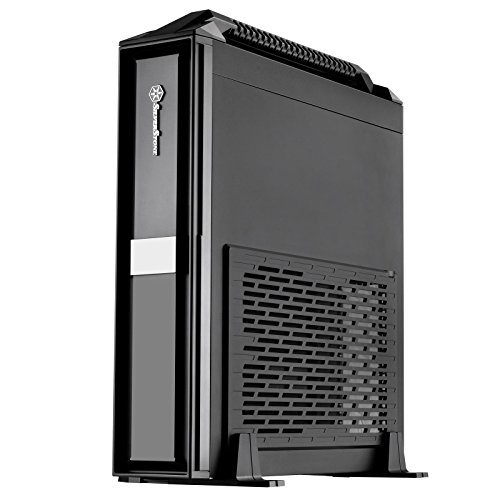
SilverStone Slim Mini-ITX Case with Handle
Best for: portable Mini-ITX builds with long graphics cards
- Motherboard Support
- Mini-ITX
- Case Type
- Slim Small Form Factor
- Max GPU Length
- 13 inches
- Dimensions
- 14.6 × 15 × 3.43 inches
- Weight
- 7.72 pounds
This SilverStone slim small form factor chassis measures 3.43 inches thick and includes a removable top handle for portability. It accepts standard Mini-ITX motherboards and compact SFX power supplies while leaving space for graphics cards up to 13 inches long via an independent expansion slot design. You can position it vertically or horizontally on your desk, making it a functional choice if you need a compact, transportable desktop setup.
Pros
- Fits graphics cards up to 13 inches long
- Removable carrying handle simplifies transport
- Supports both horizontal and vertical orientations
- Tool-less drive cage design speeds up installation
Cons
- Restricted to Mini-ITX motherboards and SFX power supplies
- Slim 3.43-inch height limits CPU cooler clearance
Good fit if
- You need a portable Mini-ITX build with a physical handle.
- You want to mount a full-length graphics card up to 13 inches.
- You require flexible horizontal or vertical placement on your desk.
Skip if
- You plan to use a standard ATX power supply or larger motherboard.
- You need clearance for tall aftermarket CPU tower coolers.
Verdict: SilverStone Slim Mini-ITX Case with Handle delivers a compact, transportable enclosure capable of housing 13-inch graphics cards. It keeps your desktop footprint minimal whether oriented horizontally or vertically.
Specifications side by side
| Spec | Zalman 4-Port ARGB Controller Hub | Fractal Design Core Micro ATX Case | Cooler Master N200 Mesh Mini-Tower | Thermaltake Versa H21 ATX Mid Tower | Phanteks Enthoo Pro Non-Window Full Tower | SilverStone Micro-ATX Small Form Factor Case | SilverStone Mini-ITX Mesh Front PC Case | SilverStone Slim Mini-ITX Case with Handle |
|---|---|---|---|---|---|---|---|---|
| Motherboard Support | not specified | Micro ATX | mATX, Mini-ITX | ATX | not specified | Micro-ATX, Mini-DTX, Mini-ITX | Mini-DTX, Mini-ITX | Mini-ITX |
| Case Type | not specified | not specified | Mini Tower | Mid Tower | Full Tower | SFF | not specified | Slim Small Form Factor |
| Included Fans | not specified | not specified | not specified | not specified | 1x 200mm, 1x 140mm | not specified | not specified | not specified |
| Radiator Support | not specified | not specified | 240mm | not specified | not specified | not specified | 140mm | not specified |
| Max GPU Length | not specified | Up to 350mm (210mm with HDD tray) | 355mm (14 inches) | not specified | not specified | Any length | 10.5 inches | 13 inches |
| Tower Size | not specified | not specified | Mini-Tower | Mid-Tower | Full-Tower | Small Form Factor | not specified | Small Form Factor |
| Lighting | ARGB | not specified | not specified | not specified | not specified | not specified | not specified | not specified |
| Connector Type | 3-Pin | not specified | not specified | not specified | not specified | not specified | not specified | not specified |
| Dimensions | 1.77 × 1.14 × 0.55 inches | 16.5 × 6.8 × 13.9 inches | 17.5 × 7.9 × 14.9 inches | 18.7 × 8.2 × 16.9 inches | 22 × 10 × 21 inches | 19 × 15 × 13 inches | 7.13 × 11.2 × 8.74 inches | 14.6 × 15 × 3.43 inches |
| Weight | not specified | 8 pounds | 9.5 pounds | 9.3 pounds | 2.2 pounds | 13.5 pounds | 5.4 pounds | 7.72 pounds |
| Color | Black | Black | N200 | Black | BLACK NO WINDOW | Black (SG11) | SG13B-V1 | ML08B-H |
| Model | ZM-4PALC | FD-CA-CORE-1000-BL | NSE-200-KKN1 | CA-1B2-00M1NN-00 | PH-ES614PC_BK | SG11B | SG13B | ML08B-H |
| Size | not specified | not specified | N200 | H21 | not specified | not specified | not specified | not specified |
For appliance comparisons, see our juicer buying guide for details on key features and top selections.
Frequently asked questions
Can you install a standard ATX power supply in a small form factor case?
Yes, certain compact enclosures support standard ATX power supplies. The SilverStone SG11B Micro-ATX case and the SilverStone SG13B Mini-ITX chassis both accommodate standard ATX power supplies without requiring specialty units. This compatibility allows you to utilize standard desktop hardware while keeping your overall system footprint small.
How do you control ARGB lighting if your motherboard lacks 3-pin headers?
You can install an external hardware controller to manage your lighting components. The Zalman ZM-4PALC 4-port hub connects up to four 3-pin 5V ARGB devices without requiring motherboard headers. Its magnetic base secures directly to steel chassis panels, and it integrates with your case switch for straightforward manual lighting control.
What graphics card length fits inside a portable Mini-ITX case?
Clearance depends on the specific chassis layout and internal bracket design. For example, the SilverStone SG13B supports expansion cards up to 10.5 inches long. If you need portable hardware with more room, the SilverStone ML08B-H slim chassis features an integrated handle and accommodates graphics cards up to 13 inches.
Do Micro-ATX cases provide enough clearance for long graphics cards?
Yes, many Micro-ATX enclosures accommodate full-length expansion cards easily. The Cooler Master N200 mini-tower provides dedicated room for long graphics cards alongside multiple storage drives. In addition, the SilverStone SG11B and Chieftec CI-01B-OP both house full-length graphics cards within compact, desk-friendly Micro-ATX chassis dimensions.
What CPU cooler clearance limits should you expect in small form factor cases?
Compact enclosures frequently impose strict vertical height restrictions on processor coolers. For instance, the SilverStone SG11B small form factor case specifies a maximum CPU cooler height of 82mm. You must verify your heatsink dimensions before assembling components inside compact chassis to ensure the top panel closes without obstruction.
Can you still build a modern PC with an internal optical drive?
Yes, select computer chassis continue to provide dedicated space for optical disc drives. The Chieftec CI-01B-OP Micro-ATX case includes an optical drive bay while still accommodating long graphics cards. This layout provides functional legacy media support without requiring you to move up to a large mid-tower frame.
How do mesh panels improve airflow in mid-tower and mini-tower cases?
Ventilated mesh panels allow ambient air to pass freely into the chassis without restrictive solid barriers. The Thermaltake Versa H21 mid-tower and Cooler Master N200 mini-tower use mesh front panels to improve airflow across internal hardware. This design also provides clear mounting points and airflow channels for liquid cooling installations.